How to Set Boundaries with Toxic Parents (Without Guilt)
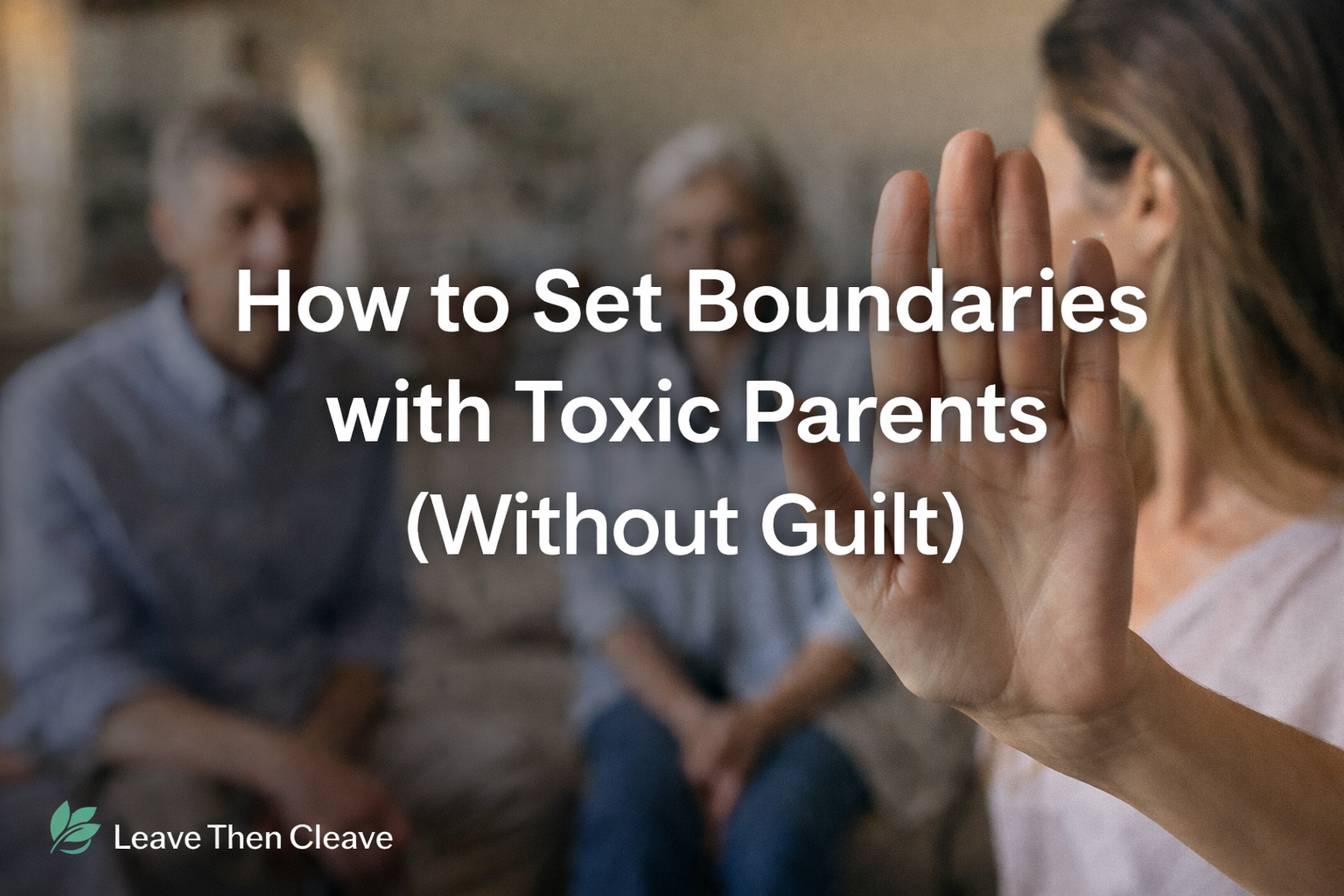
If you’ve ever tried to set a boundary with your parents… and immediately felt guilty for it—you’re not alone.
For many of us, the hardest part of boundaries isn’t knowing what to say.
It’s what we feel after we say it.
The second you create space, tell the truth, or say no…
something inside you says:
“This isn’t right.”
“You’re hurting them.”
“You’re being selfish.”
But what if that guilt doesn’t mean you’re doing something wrong?
What if it actually means… you’re doing something new?
Why Setting Boundaries with Parents Feels So Hard
Most of us weren’t raised to see boundaries as healthy.
We were taught:
Honor your parents
Keep the peace
Don’t disappoint people
Be the “good son” or “good daughter”
And over time, those messages can turn into something deeper:
👉 Your worth becomes tied to how well you manage other people’s emotions.
So when you finally say:
“I’m not comfortable with that”
“We’re not going to do that anymore”
“I need some space”
…it doesn’t just feel like a boundary.
It feels like a betrayal.
The Truth About Guilt (That Most People Don’t Tell You)
Guilt is often misunderstood.
We think:
“If I feel guilty, I must be doing something wrong.”
But in family systems—especially unhealthy ones—guilt is often:
👉 a conditioned response to breaking old patterns
Not a moral failure.
Here’s the shift:
Guilt doesn’t always mean you’re wrong
It often means you’re no longer playing the role you were assigned
And when that role changes… the system reacts.
What “Toxic” Actually Means in a Family
Before we go further, let’s define this clearly.
A “toxic” dynamic doesn’t necessarily mean:
your parents are evil
or that there’s constant chaos
It often looks more subtle:
You feel controlled or manipulated
Your boundaries are ignored or punished
You’re made to feel responsible for their emotions
You’re labeled as “difficult” when you speak honestly
Truth creates tension… not understanding
If that resonates, your instincts are worth listening to.
How to Set Boundaries with Toxic Parents (Practically)
Let’s make this real.
1. Get Clear on What You’re Actually Protecting
Boundaries aren’t about controlling others.
They’re about protecting:
your peace
your mental health
your marriage
your values
Ask yourself:
“What am I trying to protect right now?”
Clarity reduces guilt.
2. Start Simple and Specific
You don’t need a dramatic speech.
Boundaries can sound like:
“We’re not discussing that anymore.”
“We won’t be coming this weekend.”
“That doesn’t work for us.”
Simple. Clear. No over-explaining.
3. Expect Pushback (This Is Normal)
If your family is used to access, control, or influence…
👉 your boundary will feel like a disruption.
You may hear:
“You’ve changed”
“This isn’t like you”
“We’re just trying to help”
That doesn’t mean your boundary is wrong.
It means it’s working.
4. Don’t Wait for the Guilt to Go Away
This is the part most people get stuck on.
They think:
“I’ll set the boundary once I feel confident”
But confidence comes after action.
Not before.
👉 You may feel guilt
👉 And still move forward
Both can exist at the same time.
5. Stay Consistent (This Is Where Change Happens)
One boundary doesn’t change a system.
Consistency does.
You don’t need to escalate.
You don’t need to argue.
You just need to:
👉 Hold the line… calmly and repeatedly
What Happens When You Start Setting Boundaries
At first, it may feel like things are getting worse.
More tension
More distance
More emotion
But over time, one of two things happens:
The relationship adjusts
Or you gain clarity about what’s possible
Either way…
👉 you become more grounded, more honest, and more at peace
If You’re Feeling the Weight of This… You’re Not Alone
Setting boundaries with parents isn’t just behavioral.
It’s emotional.
It’s spiritual.
And for many people…
👉 It feels like grief.
Grieving:
what you hoped the relationship would be
what it actually is
and what may never change
That’s real. And it matters.
Where to Go From Here
If this resonates with you, there are a few ways to take the next step:
📖 Start with our free chapter
🎧 Listen to the podcast episode on boundaries and family systems
🤝 Or explore a Clarity Conversation if you’re navigating this in real time
You don’t have to figure this out alone.
Final Thought
You are not a bad son or daughter for needing space.
You are not selfish for telling the truth.
And you are not wrong for protecting what matters most.
Sometimes the most loving thing you can do…
👉 is stop participating in what’s hurting you.
